
Ngk Ignition Coil U1032 Ngk48143 Distributor Coil Premium Quality Perfect Fit
Submitted by admin on Sun, 10/18/2026 - 12:31
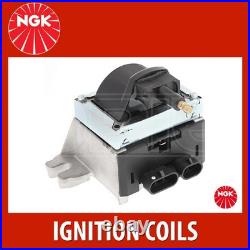



NGK Ignition Coil U1032 NGK48143 Distributor Coil - Premium Quality Perfect Fit. Experience is premium in the automotive business, and we have loads of it. Our experts are happy to answer your questions on oil or anything else we stock. Any damages, we replace, no quibbles.
1: A small sized integrated driving circuit is built into the top of the coil. 2: The components and materials used are of superior quality to ensure optimal performance. 3: The superior testing and inspection processes ensure high quality. 4: Diagonal windings are used to eliminate sectioned bobbins, reducing the size and weight. NGK Ignition Coil - U1032 (NGK48143) Plug Top Coils.
Please refer to the NGK Ignition Coil Guide PDF. With any queries - we are happy to help! This ignition coil is of the. Design and supplies the spark plugs with the high voltage via a mechanical ignition distributor.
Is fitted of this design. NGK's range of OE quality Ignition Coils has over 300 part numbers which means for the top 10 manufacturers alone they deliver over 90% coverage of the UK carpark. With their'perfect match for every engine' philosophy, you'd expect nothing less from NGK. Packaging will be clearly marked with. "Non-Returnable if packaging is opened".
For vehicles with ignition distributor. Compatible with the following OEM references. 77 70 074 914 6. 77 70 085 266 2. 309 Petrol Hatch 1.9 1905cc 80KW 109HP DDZ (XU9M) (1988 - 1989). 309 Petrol Hatch 1.9 1905cc 80KW 109HP DDZ (XU9M) (1990 - 1993). 405 Petrol Saloon 1.9 1905cc 80KW 109HP DDZ (XU9M) (1987 - 1992). 405 Petrol Estate 1.9 1905cc 80KW 109HP DDZ (XU9M) (1988 - 1992). 405 Petrol Estate 1.9 4x4 1905cc 80KW 109HP DDZ (XU9M) (1988 - 1992). 405 Petrol Saloon 1.9 4x4 1905cc 80KW 109HP DDZ (XU9M) (1988 - 1992). 11 Petrol Hatch 1.7 1721cc 55KW 75HP F3N 718 (1984 - 1988). 19 Petrol Saloon 1.4 1390cc 57KW 78HP E6J 700;E6J 701 (1988 - 1990). 19 Petrol Convertible 1.7 1721cc 70KW 95HP F3N 742;F3N 743 (1991 - 1992).
19 Petrol Convertible 1.8 1794cc 65KW 88HP F3P 704;F3P 705;F3P 706;F3P 707;F3P 708;F3P 760 (1992 - 1996). 19 Petrol Hatch 1.2 1171cc 44KW 60HP E7F 730 (1992 - 1994). 19 Petrol Hatch 1.4 1390cc 59KW 80HP E6J 700;E7J 706 (1992 - 1995). 19 Petrol Hatch 1.7 1721cc 66KW 90HP F3N 743 (1992 - 1995).
19 Petrol Hatch 1.8 1794cc 65KW 88HP F3P 706;F3P 707;F3P 708;F3P 760 (1992 - 1995). 19 Petrol Hatch 1.8 1794cc 81KW 110HP F3P 700 (1992 - 1994). 19 Petrol Hatch 1.8 1794cc 66KW 90HP F3P 706;F3P 760 (1992 - 1995). 19 Petrol Saloon 1.7 1721cc 66KW 90HP F3N 742;F3N 743 (1992 - 1995).
19 Petrol Saloon 1.8 1794cc 65KW 88HP F3P 704;F3P 705;F3P 706;F3P 707;F3P 708;F3P 760 (1992 - 1995). 19 Petrol Saloon 1.8 1794cc 66KW 90HP F3P 706;F3P 760 (1992 - 1995). 19 Petrol Saloon 1.8 1794cc 81KW 110HP F3P 700 (1992 - 1994). 19 Petrol Convertible 1.8 1794cc 66KW 90HP F3P 706;F3P 760 (1993 - 1996). 19 Petrol Hatch 1.4 1390cc 57KW 78HP E6J 700 (1993 - 1998).
19 Petrol Saloon 1.4 1390cc 59KW 80HP E7J 706 (1994 - 1995). 21 Petrol Estate 2.0 1995cc 88KW 120HP J7R 746;J7R 747 (1986 - 1993). 21 Petrol Estate 2.0 1995cc 85KW 116HP J7R 750;J7R 751 (1986 - 1988).
21 Petrol Saloon 2.0 1995cc 85KW 116HP J7R 750;J7R 751 (1986 - 1988). 21 Petrol Saloon 2.0 1995cc 75KW 102HP J6R 758;J6R 759;J6R 792;J6R 793 (1986 - 1993). 21 Petrol Saloon 2.0 1995cc 88KW 120HP J7R 746;J7R 747 (1986 - 1993).
21 Petrol Saloon 2.0 Turbo 1995cc 129KW 175HP J7R 752 (1987 - 1990). 21 Petrol Estate 1.7 1721cc 66KW 90HP F3N 722;F3N 723 (1989 - 1993). 21 Petrol Estate 2.0 4x4 1995cc 88KW 120HP J7R 746;J7R 747 (1989 - 1993). 21 Petrol Hatch 1.7 1721cc 66KW 90HP F3N 722;F3N 723 (1989 - 1994).
21 Petrol Hatch 2.0 1995cc 88KW 120HP J7R 746;J7R 747 (1989 - 1993). 21 Petrol Saloon 1.7 1721cc 66KW 90HP F3N 722;F3N 723 (1989 - 1994). 21 Petrol Saloon 2.0 4x4 1995cc 99KW 135HP J7R 740 (1989 - 1994). 21 Petrol Saloon 2.0 Turbo 4x4 1995cc 129KW 175HP J7R 752 (1989 - 1993). 21 Petrol Estate 2.0 1995cc 99KW 135HP J7R 740 (1990 - 1994). 21 Petrol Hatch 2.0 1995cc 99KW 135HP J7R 740 (1990 - 1992). 21 Petrol Hatch 2.0 4x4 1995cc 99KW 135HP J7R 740 (1990 - 1992).
21 Petrol Saloon 2.0 1995cc 99KW 135HP J7R 740 (1990 - 1994). 21 Petrol Saloon 2.0 Turbo 1995cc 119KW 162HP J7R 756 (1990 - 1992).
21 Petrol Saloon 2.0 Turbo 4x4 1995cc 119KW 162HP J7R 756 (1990 - 1992). 25 Petrol Hatch 2.4 V6 Turbo 2458cc 133KW 181HP Z7U 702 (1984 - 1990). 25 Petrol Hatch 2.8 V6 Injection 2849cc 100KW 136HP Z7W 702 (1986 - 1988). 9 Petrol Saloon 1.4 1397cc 44KW 60HP C1J 715;C1J 792;C1J 796;C2J 730 (1981 - 1988). 9 Petrol Saloon 1.4 Automatic 1397cc 50KW 68HP C2J 718;C2J 757 (1981 - 1985). 9 Petrol Saloon 1.4 1397cc 49KW 67HP C2J 720;C2J 766;C2J 767;C2J 768 (1985 - 1988). 9 Petrol Saloon 1.4 Turbo 1397cc 85KW 116HP C1J 764 (1986 - 1989).
Clio Petrol Hatch 1.2 1171cc 43KW 58HP E7F 700;E7F 708;E7F 750 (1990 - 1998). Clio Petrol Hatch 1.2 1171cc 44KW 60HP E5F 710 (1990 - 1996). Clio Petrol Hatch 1.4 1390cc 57KW 78HP E6J 712;E6J 713;E6J 760 (1990 - 1998).
Clio Petrol Hatch 1.2 1171cc 40KW 54HP E7F 700;E7F 704;E7F 706;E7F 708;E7F 750 (1991 - 1996). Clio Petrol Hatch 1.4 1390cc 58KW 79HP E7J 601;E7J 718;E7J 719;E7J 754 (1991 - 1998).
Clio Petrol Hatch 1.4 1390cc 55KW 75HP E6J 718;E7J 756;E7J 757 (1991 - 1998). Clio Petrol Hatch 1.4 1390cc 59KW 80HP E7J 710;E7J 711 (1991 - 1998). Clio Petrol Hatch 1.8 1794cc 65KW 88HP F3P 710;F3P 714 (1991 - 1998). Clio Petrol Hatch 1.8 16V 1764cc 99KW 135HP F7P 722 (1991 - 1996). Clio Petrol Panel Van 1.2 1171cc 44KW 60HP E5F 710;E7F 750 (1991 - 1998).
Clio Petrol Panel Van 1.2 1171cc 40KW 54HP E7F 706 (1991 - 1998). Clio Petrol Hatch 1.8 Rsi 1794cc 80KW 109HP F3P 712 (1993 - 1995).
Clio Petrol Hatch 1.8 1794cc 66KW 90HP F3P 710;F3P 712;F3P 714 (1994 - 1996). Clio Petrol Hatch Williams 1998cc 108KW 147HP F7R 700 (1994 - 1998). Clio Petrol Hatch 1.8 Rsi 1794cc 79KW 107HP F3P 758 (1995 - 1998).
Espace Petrol MPV 2.2 2165cc 79KW 108HP J7T 770 (1986 - 1990). Espace Petrol MPV 2.0 i Quadra 1995cc 87KW 118HP J7R 760 (1988 - 1992). Espace Petrol MPV 2.2 Quadra 2165cc 79KW 108HP J7T 770 (1988 - 1990).
Espace Petrol MPV 2.0 i 1995cc 87KW 118HP J7R 760 (1989 - 1990). Espace Petrol MPV 2.0 1995cc 76KW 103HP J7R 768 (1991 - 1996). Espace Petrol MPV 2.2 4x4 2165cc 79KW 108HP J7T 772;J7T 773 (1991 - 1996). Espace Petrol MPV 2.8 V6 2849cc 110KW 150HP Z7W 713;Z7W 717 (1991 - 1996). Espace Petrol Van-Based MPV 2.2 2165cc 79KW 107HP J7T 772 (1992 - 1996).
Extra Petrol Van-Based MPV 1.4 1390cc 59KW 80HP E7J 773 (1995 - 1997). Laguna Petrol Hatch 1.8 1794cc 66KW 90HP F3P 720;F3P 724 (1993 - 2001). Laguna Petrol Hatch 2.0 1998cc 83KW 113HP F3R 722;F3R 723 (1993 - 2001).
Laguna Petrol Estate 1.8 1794cc 69KW 94HP F3P 678;F3P 720;F3P 724 (1995 - 2001). Laguna Petrol Estate 2.0 1998cc 83KW 113HP F3R 722;F3R 723 (1995 - 2001). Laguna Petrol Hatch 1.8 1794cc 69KW 94HP F3P 720;F3P 724 (1995 - 2001). Master Petrol Bus 30 2.2 2165cc 67KW 91HP J7T 782;J7T 788 (1980 - 1998). Master Petrol Van 30 2.2 2165cc 67KW 91HP J7T 782;J7T 788 (1980 - 1998). Master Petrol Bus 28-35 2.0 1995cc 58KW 79HP J5R 718 (1986 - 1998). Master Petrol Chassis Cab 28-35 2.0 1995cc 58KW 79HP J5R 728 (1986 - 1998). Master Petrol Van 28-35 2.0 1995cc 58KW 79HP J5R 718 (1986 - 1998). Megane Petrol MPV 1.4 i 1390cc 55KW 75HP E7J 764 (1997 - 1999). Safrane Petrol Hatch 2.0 1995cc 77KW 105HP J7R 732;J7R 733 (1992 - 1996). Safrane Petrol Hatch 2.0 12V 1995cc 97KW 132HP J7R 734;J7R 735 (1992 - 1996). Safrane Petrol Hatch 2.2 2165cc 79KW 107HP J7T 762 (1992 - 1996). Safrane Petrol Hatch 2.2 2165cc 101KW 137HP J7T 760;J7T 761 (1992 - 1996). Safrane Petrol Hatch 3.0 V6 2975cc 123KW 167HP Z7X 722;Z7X 723 (1992 - 1996).
Safrane Petrol Hatch 3.0 V6 2963cc 123KW 167HP Z7X 755 (1996 - 2000). Super 5 Petrol Hatch 1.7 1721cc 54KW 73HP F3N 716;F3N 717 (1986 - 1995).
Super 5 Petrol Hatch 1.7 i 1721cc 69KW 94HP F3N 702;F3N 722 (1986 - 1991). Super 5 Petrol Hatch 1.7 1721cc 64KW 87HP F2N 740;F2N 742 (1987 - 1995). Trafic Petrol Chassis Cab 1.4 1397cc 35KW 48HP 847 700;C1J 700 (1980 - 1989). Trafic Petrol Chassis Cab 2.0 1995cc 59KW 80HP J5R 726 (1980 - 1989).
Trafic Petrol Chassis Cab 1.7 1721cc 50KW 68HP F1N 722 (1986 - 1989). Trafic Petrol Van 2.0 1995cc 59KW 80HP J5R 716;J5R 722;J5R 726 (1986 - 1989). Trafic Petrol Bus 2.2 2165cc 70KW 95HP J7T 780 (1989 - 1994). Trafic Petrol Chassis Cab 1.7 1721cc 50KW 68HP F1N 722 (1989 - 1994). Trafic Petrol Chassis Cab 2.0 RWD 1995cc 59KW 80HP J5R 726 (1989 - 1997).
Trafic Petrol Van 1.4 1397cc 35KW 48HP C1J 700 (1989 - 1991). Trafic Petrol Van 2.2 2165cc 70KW 95HP J7T 780 (1989 - 1994). Trafic Petrol Van 2.2 4x4 2165cc 70KW 95HP J7T 780 (1989 - 1994).
Trafic Petrol Bus 2.2 2165cc 74KW 101HP J7T 600 (1994 - 1997). Trafic Petrol Bus 2.2 4x4 2165cc 74KW 101HP J7T 600 (1994 - 1997).
Trafic Petrol Chassis Cab 2.2 2165cc 74KW 101HP J7T 600 (1994 - 1998). Trafic Petrol Chassis Cab 2.2 4x4 2165cc 74KW 101HP J7T 600 (1994 - 1998). Trafic Petrol Van 2.2 2165cc 74KW 101HP J7T 600 (1994 - 1997). Trafic Petrol Van 2.2 4x4 2165cc 74KW 101HP J7T 600 (1994 - 1997). 340-360 Petrol Hatch 1.4 1397cc 46KW 63HP B 14.3 E (1982 - 1985).
340-360 Petrol Hatch 1.4 1397cc 52KW 71HP B 14.4 S (1983 - 1986). 340-360 Petrol Hatch 1.4 1397cc 51KW 70HP B 14.4 S (1987 - 1988). 440 Petrol Hatch 1.7 1721cc 70KW 95HP B 18 F (1988 - 1989).
440 Petrol Hatch 1.7 1721cc 78KW 106HP B 18 EP (1988 - 1996). 440 Petrol Hatch 1.7 1721cc 64KW 87HP B 18 KP (1988 - 1996).
440 Petrol Hatch 1.7 Turbo 1721cc 88KW 120HP B 18 FT (1988 - 1996). 440 Petrol Hatch 1.7 1721cc 75KW 102HP B 18 FP (1989 - 1996).
460 Petrol Saloon 1.7 1721cc 64KW 87HP B 18 KP (1988 - 1996). 460 Petrol Saloon 1.7 1721cc 80KW 109HP B 18 E (1989 - 1992). 460 Petrol Saloon 1.7 1721cc 75KW 102HP B 18 EP (1989 - 1992). 460 Petrol Saloon 1.7 Turbo 1721cc 88KW 120HP B 18 FT (1989 - 1996). 460 Petrol Saloon 1.7 1721cc 66KW 90HP B 18 KP (1990 - 1996).
480 Petrol Coupe 1.7 1721cc 80KW 109HP B 18 E (1986 - 1988). 480 Petrol Coupe 1.7 1721cc 78KW 106HP B 18 E (1986 - 1989). 480 Petrol Coupe 1.7 1721cc 70KW 95HP B 18 F (1987 - 1989). 480 Petrol Coupe 1.7 1721cc 75KW 102HP B 18 EP (1989 - 1996). OPIE OILS was established in 1925 and has been trading on the Internet since 2004.
In this time we have become the UK's largest independent online retailer of quality Oils and Fluids. We sell the most comprehensive range of quality and specialist oils for Cars and Bikes anywhere in Europe. We stock engine oils, gear oils, differential and axle oils, brake fluids, power steering fluids, coolants and workshop products from Castrol, Mobil, Shell, Fuchs, Silkolene, Motul, Millers Oils, Millers Classic Oils and Red Line.
How long will it take to get my order? After receiving cleared funds we will dispatch all orders within the time frame given on the item listing. The majority of items are held in stock and dispatched from our UK warehouse. Monday to Friday inclusive, unless we contact you to advise otherwise. We may list products which are not held as stock and are special order items.
Where can my order be delivered to? We regret that our couriers are not able to deliver to PO boxes, university campuses and military bases. How will I know when my order will arrive? We send hundreds of parcels every week. We know how to pack your parcel so that it reaches you safely.
We use high quality, custom made boxes to enable us to pack orders sensibly, offering optimum protection against courier damage. If - despite our best efforts - any order is damaged, we'll replace it without question! We always want you to be satisfied with your order and pride ourselves on our customer service.
Our cancellation policy does not affect your rights when we are at fault, e. If goods are faulty or mis-described. If you cancel, you must return the goods to us at your own expense. If a fault is found later on or if you delay in making a complaint you will still be entitled to a replacement.
We cannot accept responsibility for additional charges or consequential loss incurred if a product does not fit or does not give the desired results. Our liability is limited to the price paid for the goods only. In the unlikely event we have sent incorrect goods i. Not what you ordered as shown on your order confirmation. When the goods supplied do not fit your vehicle and we provided incorrect guidance to you as to which product/s were suitable.
We ask that you return the goods in the original packaging, clean and resaleable. In any circumstance within 30 days of you receiving the goods.
In the unlikely event that you are not 100% satisfied then please give us the opportunity to resolve any issues you may have before leaving feedback. How long will it take for my order to arrive? The vast majority of items are held in stock and dispatched from our UK warehouse.
Which Courier do you use? Please ensure someone is present to sign for the item. How can I return items that I have ordered in error? How do I get my Tracking No? To where can my order be delivered?
Why is one synthetic oil so much more expensive than another? There are three types of synthetic oils; Hydrocracked, Polyalphaolefin (PAO) and Ester oils. All cheaper oils and the'synthetic' component of part-synthetic or semi-synthetic oils are hydrocracked mineral oils.
PAO synthetics are genuine, lab-made synthetic oils that are better lubricants than hydrocracked oils as they are built for their specific use, rather than the hydrocracked oils that are modified to perform a purpose. Ester based oils are the top end of oil technology and give the best protection available. The ester content (usually ester oils are mixed with PAO oils) has several functions that are very useful. Esters are electrostatically charged so they stick to metal surfaces, meaning that when the vehicle is started, there is already a layer of oil present. They are also more stable at higher temperatures, making them ideal as performance lubricants.
The ester content also helps to make those oils better lubricants in general. Is it okay to mix oils? Mixing oil brands, types (synthetic, semi-synthetic and mineral) and viscosities is fine. There are a few exceptions;castor and plant based (as used in some biodegradable oils) are not safe to mix with conventional oils.
The only problem with mixing oils is that the quality of the better oil is diluted by the lesser one. Do I need a diesel or petrol oil for my car? In the case of cars with diesel particulate filters (DPFs/FAPs), they will often need an oil that meets an ACEA C specification, which relates to low ash oils. The ACEA specification of an oil is always written on the bottle so long as it meets the spec!
The use of oils that do not meet the correct ACEA C specification can result in the particulate filter becoming blocked, an expensive repair. Other than that, there isn't really such a thing as a diesel engine oil as the vast majority of oils are suitable for both petrol and diesel engines, regardless of how they are marketed. If you look at the specifications listed on an oil, there is usually an ACEA A and an ACEA B specification. The A refers to petrol engine specifications and B to diesel.
You will see that the numbers next to the letters are either the same or very close, meaning that the oil is suitable for both types of engine. How often should I change my oil?
The life of the oil is dependent on many factors. Full synthetic oils last longer than semi-synthetics or mineral oils, so although they may cost more in the first place, a full synthetic can work out as a cheaper option in the long run. Many cars specify the use of full synthetic long-life oils and these may last over 20000 miles or up to 24 months. If the car is used on track, the oil is subjected to far harsher conditions than motorway use.
That may mean that a good track oil will have broken down sufficiently to need changing after 10 hours of use, whereas the same oil would be good for over 100 hours of use on motorways. Short journeys are very hard on the oil as it does not get the chance to get warm and flow properly as well as acceleration and deceleration making the engine work harder. Motorway use is the easiest condition for oil, the speeds are fairly consistent and rarely push the engine hard, there is plenty of air flow to help cool the engine and the oil has a chance to get up to temperature and flow properly. Certain engines suffer from fuel dilution (fuel mixing with the oil) and that is one of the quickest ways that an oil can breakdown. Should I use an oil additive?
Good quality engine oils already contain a complex additive pack including detergents and dispersants, anti-wear, anti-corrosion and anti-foaming additives. The only additives we sometimes advise using are the limited slip differential friction modifiers, for certain differentials, and engine oil additives to assist in the process of breaking in a new engine. My engine burns oil - should I use a thicker one? It depends on the engine, what sort of use it gets, how much oil is being used and type of oil being used. Certain engines really prefer a specific grade of oil to operate optimally, others aren't so fussy.
It's best to ask us if you aren't sure if your car can use a range of different viscosity oils. Most car manufacturers consider it acceptable for an engine to burn a litre of oil every 1000 miles or in some cases, 1000km. While topping up the oil at that frequency may be annoying and possibly expensive, there is generally nothing to worry about. Using a full synthetic oil may help to reduce oil consumption if a mineral or semi-synthetic oil is being used. Mineral based oils consist of a mix of different sized molecules and the smaller ones can evaporate and then burn relatively easily, increasing the rate of oil consumption.
The molecules in synthetic oils are uniform, so they are less likely to evaporate and burn. My car is only being used on the road - do I need a full synthetic oil?
It depends on the car. If a car requires a 0w-x grade of oil, then it must be a genuine synthetic oil as it is impossible to make an 0w viscosity oil from mineral oils. Even in cars that do not need oil that meet the above criteria, most of the time a synthetic oil is a preferable option as they give better protection and last longer. This is very relevant in engines used on track. Will using a certain oil help my engine to make more power?
When a top quality oil of the correct viscosity is used, a vehicle may actually have a higher power output at the wheels than with other oils. The'gain' in power is actually a reduction of the power lost in the engine. Internal resistance due to pumping losses and viscous drag and friction is where power is lost and minimising those will lead to more efficient running. Using a good oil reduces the friction as well as increases the protection.
A common approach to lubricating a powerful engine is to use as thick an oil as is available, but that adds to the internal resistance as the engine has to work harder to move the oil. That can also lead to increased wear in the engine as the oil does not flow as well as the engine would like. Often an increase in the quality of the oil used rather than the viscosity will be sufficient for many modified cars and that will actually give better protection as well as a slightly increased power output. Automotive oils are naturally clear, not the amber colour that people assume they are. The reason they are often amber coloured is due to a dye manufacturers add and is only added as people assume oils should be a certain colour.
There are many oils on the market that differ from the'norm' and this is simply due to the addition of different coloured dyes. The dyes have no actual benefit to the oil, other than making it stand out as different to the rest. Why does my oil turn black? As well as lubricating an engine, another important feature of oil is that it cleans, removing combustion by-products from the engine and keeping them in suspension in the oil.
This prevents the by-products from settling and building up as deposits in the engine. Should I use an oil flush? In the vast majority of cases, there is no need to flush the engine and flushing can be harmful.
What can happen is the flush can loosen harmless deposits in the engine, but then not remove them. Your new oil goes in and after it gets warm and is flowing nicely, the bits which are loosened come off into the oil, so you end up with hard bits floating around in your oil - the last thing you want! If you really want to flush the oil system, the best thing you can do is drain out the oil that is in there, put in some basic mineral oil and run the car for a short while so the oil gets nice and warm. After running it, drain out the mineral oil and put in the correct oil. What oil should I use to run in an engine? A basic mineral oil should be used for running in as friction between the piston rings and cylinder linings is needed to allow the engine to bed in properly. If a synthetic oil is used, it prevents sufficient friction being generated and can lead to the bores becoming glazed.
That causes a loss of power and increased oil consumption. We also sell specialist running in oil and trouble-shooting products to assist with running-in. My garage recommends a brand of oil in my car, you recommend something different. So is our recommendation safe to use?